What a Missed Call Costs a Roofing Company
Elizabeth Palermo
Founder & CEO, Brain Kindle LLC
KEY TAKEAWAYS
- Roofing job values are high enough that a single missed call can outweigh a month of marketing spend.
- Demand arrives in bursts after weather, which is exactly when you are least able to answer.
- Storm-week callers are contacting several companies in one sitting, so second place is worth nothing.
- The fix is capture during the burst, not more leads outside it.
This is the roofing-specific version of a broader problem. For the general case, see what missed calls actually cost a trades business and missed call text back.
The short answer
At typical upstate New York roof replacement values, one unanswered call that would have closed is worth more than most contractors spend on marketing in a month. Roofing combines the highest job values in the trades with the burstiest demand, and those two facts multiply rather than add.
Run it on your own numbers
The arithmetic is simple enough to do on a phone. Take your average job value, multiply by your close rate on inbound calls, and that is what an answered call is worth on average. A missed one is worth the same number, spent elsewhere.
| Average job | Close rate | Value of one call |
|---|---|---|
| $1,200 repair | 30% | $360 |
| $9,000 replacement | 20% | $1,800 |
| $14,000 replacement | 20% | $2,800 |
| $14,000 replacement | 30% | $4,200 |
That last row is why roofing is different. In most trades a missed call is an irritation. Here, missing four in a busy week is plausibly a five-figure month.
Your numbers will differ and you should use yours. The structure of the result does not change: for roofing, the value of answering is high enough that almost any capture system pays for itself on one job.
The burst problem
Roofing demand does not arrive evenly. It arrives after wind, after hail, and after the first serious thaw, and in upstate New York that means a handful of weeks carry a disproportionate share of the year's inbound calls.
Those are precisely the weeks when every crew is out, the office is overwhelmed, and the owner is on a roof. The demand spike and your capacity to answer move in opposite directions at exactly the wrong moment.
This is why the usual advice to answer faster does not help roofers. During a storm week nobody is available to answer faster. Something has to answer that is not a person.
Storm-week callers do not wait
A homeowner with water coming through a ceiling after a windstorm is calling four roofers in one sitting, and they know everyone is busy. They are not leaving four voicemails and comparing callbacks. They are booking whoever engages first and hanging up on the rest.
It is worth being blunt about what this means. During the weeks that matter most, being second is worth exactly the same as being last.
What actually closes the gap
Three things, in order of how much they recover for the effort.
Missed call text back
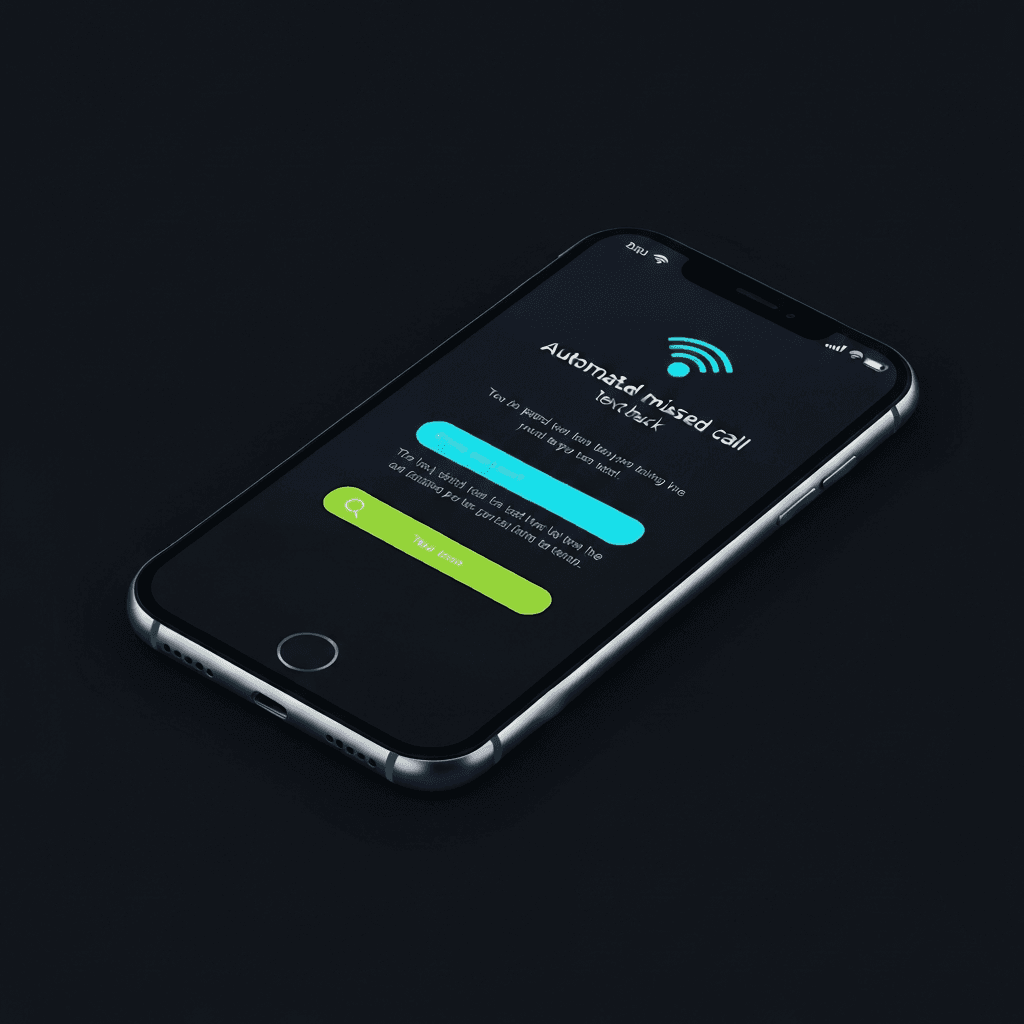
An automatic text within seconds of an unanswered call, from your business number, asking what the issue is. This converts a hang-up into a conversation and it is the single highest-return change available to a roofing company. It works hardest exactly when you are busiest.
After-hours capture
Storms do not respect business hours and the first calls often come the same evening. Something that answers, collects the address and the nature of the damage, and books an inspection means you wake up with a scheduled day rather than a voicemail queue.
A queue you can triage
During a burst, not all calls are equal. A full replacement after wind damage is worth more than a gutter question. Capturing structured details on every inquiry lets you work the list by value instead of by whoever called back first.
We build the capture layer before the season, so the storm weeks land as booked inspections rather than voicemails.
BOOK A DEMOInsurance work makes the timing tighter
A large share of upstate roofing work runs through insurance claims, and homeowners in that situation are moving on the adjuster's timetable. The contractor who inspects first often shapes the claim and is usually the one who ends up doing the work.
That compresses the window further. It is not only about being the first to answer, it is about being the first on the roof.
When to build it
Before the season, not during. Every roofer who decides to fix this mid-storm discovers that configuring a capture system while the phone is ringing is not possible. The quiet weeks are the ones to spend on it.
Frequently Asked Questions (FAQ)
Q: How many calls are we actually missing? A: Most roofers have never checked and guess low. Pull the call log for a month that included bad weather and count unanswered inbound calls. It takes about an hour and the number is usually two to three times what the owner expected.
Q: Will an automated text put homeowners off during an emergency? A: The opposite, in our experience. A homeowner with a leaking roof who gets an immediate reply feels attended to, whereas a ringing phone that goes to voicemail feels like being ignored. The text has to sound like a person and offer a real next step, not an automated acknowledgment.
Q: Should we hire an answering service for storm season? A: It is better than voicemail and worse than a configured system. Answering services take messages but rarely know your service area, cannot book against your calendar, and charge per call in exactly the weeks the volume spikes. Compare the seasonal cost honestly before committing.
Q: What about calls that come in while we are on a roof? A: That is the main case, not an edge case. Nobody should be taking calls from a roof. The point of the capture layer is that the caller is held, qualified and scheduled without anyone on the crew touching a phone until it is safe.
Q: Does this help outside storm season? A: Yes, though less dramatically. Steady-season roofing calls still get missed during site visits and estimates. The return is largest in the bursts, which is also when the cost of doing nothing is largest.